
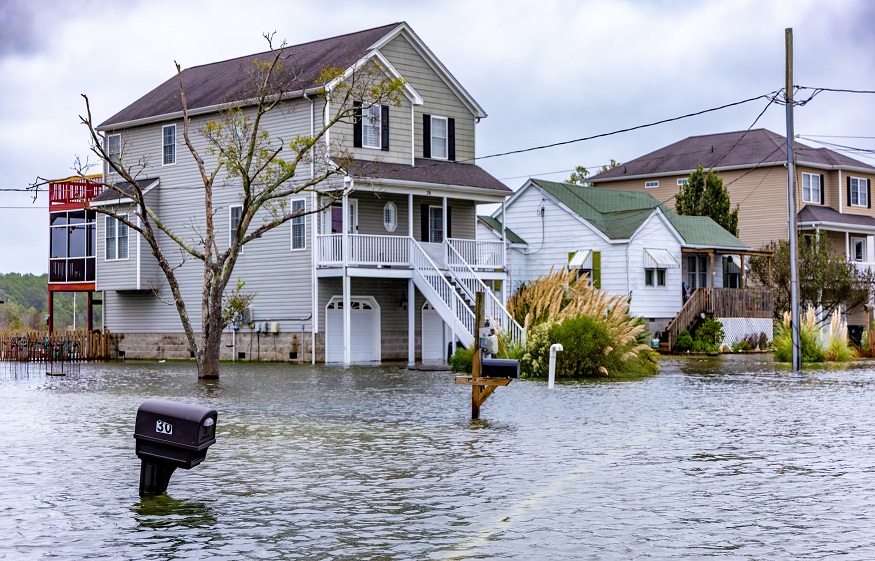
Rebuilding after a flood should not be underestimated. It’s not as easy as cleaning the room and putting everything back. There is a sequence to follow to ensure complete recovery. Otherwise, the damage will have more lasting effects and risks.
The first 48 hours define your outcome
Shortly after water enters a building, the real critical part begins. If you catch the situation early enough, it’s still just a water damage job. If you fail to address the problem, or if you use unqualified individuals or inadequate equipment to do the job, the water damage may turn into a mold remediation job. And that’s a whole different ballgame.
The key to drying is moisture reduction. This should begin immediately after you discover water in the building. Removing standing or flood water is the critical piece, as it is impossible to dry a building unless you first remove all the water. Once the standing water is removed, evaporation is the method used to remove the residual moisture. This can be done through the use of industrial dehumidifiers and high-speed air movers.
If not done properly, the water may cause further damage to the contents of the building, and the possibility of mold growth becomes likely. Mold remediation is a whole industry in its own right, and there are standards, like the S520 Standard, the standard reference guide for professional mold remediation. Mold can cause health effects. Mold eats substances that it grows on. The moisture in wet materials will often provide the necessary environment for mold growth. Therefore, it is important to adequately dry the structure out after water damage has occurred.
Read More: The Home Improvements Nobody Thinks About Until They Need Them
Building back and covering the financial gap
If the rules make it possible, think about rebuilding to better withstand nature than the first time around. Closed-cell spray foam insulation is impermeable to water, versus standard fiberglass batts. Ceramic tile floors outlast carpet through any disaster. Raising electrical outlets and HVAC gear above potential flood levels lowers how much you could lose if water breaches your defenses once more. None of these are major cost add-ons in comparison to the cost of doing everything twice.
From the cost side, just one inch of floodwater in a home of modest proportions can rack up $25,000 in damage (FEMA). It’s a figure that catches people who think small water equals small bill off guard. It’s also one of the reasons standard homeowners’ policies can fall short – they rarely cover flood damage, to start with. Understanding what homeowners flood insurance will cover, where it’s different than your all-risk coverage, and where your personal rainy day fund is on the hook, should be a preliminary part of your financial rebuilding, not a footnote.
Document before you demolish anything
Take photos before doing any tear-out. We mean really take photos. Not a quick, low-res cell phone video of a shaky person breathing heavily. You’ll want a detailed, high-res photo series of each wall cavity, wet floor assembly, and damaged equipment and furniture. Then, document everything you remove from the property, and when you remove it.
This becomes your “insurance record,” and adjusters go by the evidence. A detailed photo timeline showing the condition of materials at time of removal is much harder for an adjuster to argue with than your word or a contractor’s report written weeks later. If there are holes in your documentation, there may be holes in your settlement. If you need to remove things to mitigate the damage and prevent additional losses, a good record of what you removed and why will protect your settlement.
Understand the regulatory layer before you rebuild
If your home is located in a flood-prone area, the rebuilding process after a flood is not just about construction, it’s also about regulations.
The 50% Rule, or the Substantial Improvement Rule, mandates that if the cost to repair your home after a flood will exceed 50% of the structure’s pre-flood market value, the entire building must be brought into compliance with the current floodplain management ordinances. This includes elevating the property to the Base Flood Elevation, or BFE. And that can be a game-changer in terms of both the scale and cost of the re-construction project.
For most homeowners, this comes as a nasty surprise well into the process. Engaging a licensed engineer to perform a structural integrity assessment – evaluating your foundations for hydrostatic pressure damage, load-bearing walls for movement, and your slab for cracks, among other assessments – can provide the information you need upfront before you set your heart on a certain rebuild scope.
Read More: Bedroom & Beyond: Choosing Modular Wardrobes with Elegant Mirror Finish
Treat it like a project, not a cleanup
Properties that fare best after a water invasion are those where most of the steps were managed rather than decided in a stressed state of urgency: assess the damage and safety of the building, document for insurance, dry the materials, properly demolish damaged parts, check the rest for mold and structural integrity, and rebuild.