
An air duct cleaning mistake can start before anyone touches a duct. Booking from a coupon, a scare story, or a vague promise of cleaner air leaves an important question unanswered: what is actually inside the system? The most useful starting point is the condition of your ducts, not an assumption that every home needs cleaning on a fixed schedule.
Cleaning on a schedule instead of on evidence
Coupons and social ads love a deadline. Clean now, clean every two years, clean because spring is here. That pressure is the first mistake, because air ducts don’t get dirty on a calendar.
EPA guidance does not present duct cleaning as routine maintenance. It points to specific reasons to consider it, such as substantial mold you can see on hard-surface duct material, signs of vermin inside the ducts, or clumps of debris blowing out of the supply registers. Those conditions give you a reason to investigate that a postcard doesn’t. The sensible order is to look first and book second.
Read More: Signs Your Outdoor Area Is Ready for a New Deck
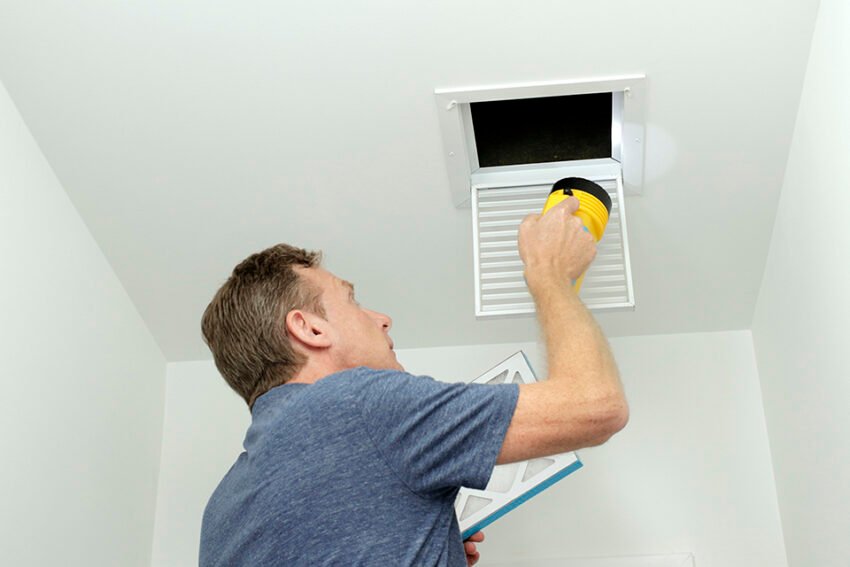
Start with what you can check without tools. Pull off one or two supply covers and shine a flashlight inside. Look at the return grille and the filter slot. If there’s a thin film of household dust, that’s normal. We’re talking about mats of dust, clear nesting material, droppings, or growth that keeps coming back after you wipe the grille.
Ask what changed in the house, too. A remodel that ran for weeks without return protection will load a system in a way normal living won’t. A humidifier that leaked onto the trunk line or a crawlspace entry left open will do the same. Those clues matter more than the date of the last cleaning.
If you can’t point to a clear reason, wait. Keep up with filtration and housekeeping and check again in a few months.
Buying on price without asking how the work gets done
The second mistake is shopping for duct cleaning the way you’d shop for an oil change. The cheapest coupon wins, no questions asked. With ducts, you’re paying for the method as much as the visit. A low advertised price tells you little until you know the scope, exclusions, and final total.
A careful contractor will talk through containment before brushing or air washing anything. That usually means sealing the system under negative pressure with a high-volume vacuum so loosened dust has somewhere to go besides your rooms. The furnace blower motor and other HVAC parts also need protection during the process, rather than having dust blasted around them. If someone can’t explain how they keep dust contained and how they protect equipment, that’s a warning sign.
Certification helps here, but it isn’t the whole story. NADCA is the trade group most homeowners hear about, and its standards give you a useful reference for what a full service should include. Use that as a starting point for questions about the crew’s training and how they document the work. Ask what happens if they find fiberglass duct board or old flex.
Get the scope in writing. The quote should identify which trunk lines and branch runs are included. It should also say whether the return side and blower compartment are covered. Ask how access points will be cut and sealed. Find out how long the visit should take. Vague answers and rushed estimates tell you plenty.
Price still matters, but it can’t be the only thing you compare.
Trying a DIY clean with a shop vacuum and brush kit
It feels logical to snake a brush down the vent and call it done. The problem is what happens to everything you knock loose. Without suitable containment, loosened dust can escape into the room instead of being collected.
Professional equipment pairs agitation with capture. A vacuum holds the duct run under negative pressure while brushes or air tools free the buildup, so debris travels into a sealed container. A household vacuum and brush kit are not a substitute for cleaning a whole duct system. Reach, filtration, and control of loosened debris matter, especially beyond the first bend. Cleaning the visible opening doesn’t show that the rest of the run is clean.
Read More: How to Choose the Right Lighting for Each Room in Your Home
There’s also a risk of damage that doesn’t show right away. Sheet metal can take firm brushing, but many homes mix materials. Flexible ductwork tears if you scrub hard or pull it out of line. Fiberglass duct board sheds its facing when it’s rubbed the wrong way. A kinked flex run then restricts flow for months.
There are useful cleaning jobs you can handle yourself. Vacuum the grilles and the accessible area just inside each vent opening, without pushing tools deeper into the duct. Change the filter on schedule and make sure it sits flat with no gaps. Those small jobs lower the load without stirring up the whole network.
Assuming every quote covers the same work
Two quotes for air duct cleaning can describe two different jobs. One covers supply trunks, branch runs, returns, and the blower area with photos before and after. The other covers a quick pass on accessible vents. The headline prices look close until you read the details of what each contractor plans to do.
This is where a little homework pays off. Ask each contractor what is included and how they will keep the house clean while they work. Ask how they reach each run and how they handle different duct types, since rigid sheet metal and flex don’t respond the same way to brushing. Fiberglass board needs its own gentle approach.
Ask what happens if they find microbial growth or heavy buildup tied to moisture. Clear answers show a practical approach to the work. Evasive ones don’t.
It also helps to compare training and documentation side by side. Look for crews that can explain their process in plain terms and show proof of training or membership in groups such as NADCA, as well as leave you with a written summary of what was done. Photos of access points before sealing and a quick test that the system starts and runs normally give you something to keep on file.
Once you have two or three comparable bids, talk to a local provider like Miller Air Duct Cleaning about scope and timing for your home. You’ll get a far more accurate price when the discussion starts from the layout of your system, not a coupon.
Mixing up filters, ducts, and dryer vents
Another common slip is treating filters and ducts as the same task. They do separate work, and mixing them up leads to wasted effort.
Start with filtration. The filter’s job is to catch airborne particles before they settle inside the HVAC system and recirculate. Most homes do well when the filter is changed on the schedule printed on the box or given by the installer, with more frequent checks during remodels or heavy use. MERV ratings describe how effectively a filter captures particles, but a higher number isn’t always the right choice. Filter size and design also affect airflow resistance, so use a type and rating compatible with your system. When in doubt, ask the installer what range suits your unit.
Ducts are the delivery path. Gaps around the filter can let air bypass it, allowing dust to collect farther into the system. A caked return grille also needs attention, but it doesn’t by itself establish that the ducts need cleaning. Vacuum the grille faces and make sure the filter sits square in its rack. That keeps cosmetic buildup down between any deeper service.
Dryer vents carry a separate airflow entirely. They move hot, damp air and lint out of the house, rather than circulating conditioned air through it. Lint buildup there is a fire concern and a drying-time concern. It calls for its own scope and suitable tools, though both services may be booked for the same appointment. Ask whether dryer exhaust cleaning is included rather than assuming the HVAC duct quote covers it.
Scrubbing ducts while the source keeps feeding them
Clean ducts can soil again fast when the source of dirt or moisture remains. A leaking humidifier or a return drawing air from a dusty crawlspace can keep supplying moisture or dirt. Unless those problems are addressed, freshly cleaned runs can become contaminated again.
Trace the moisture before you book. Look under the air handler for rust stains or damp pads. Check the condensate line for clogs and the pan for standing water. If you find active water, fix the plumbing or drainage problem first. Duct cleaning doesn’t correct a leak or drainage problem. Wet or moldy internal insulation cannot be effectively cleaned and should be replaced, with the source of moisture corrected.
The same logic applies to entry points. A return leak in a dusty attic or crawlspace can draw in particles while the system runs. Repairing that entry point addresses a source that another cleaning pass would leave in place. An HVAC professional can assess sealing needs and any related airflow problems.
Be slow to approve sprays as a cure-all. Some contractors propose biocides for any musty smell tied to bacterial growth. Ask what they found and where the moisture came from, then have them explain why a coating would help after the source is fixed. Dust and mold are not the same thing. If a substance is suspected to be mold, ask for the basis of that assessment; appearance alone may not establish what it is. The response needs to address the affected material and moisture source, not just surface cleaning.
Expecting guaranteed health gains and skipping the check at the end
Duct cleaning gets oversold. Ads link dust levels straight to coughs and bills, and that sets up disappointment. The EPA’s duct cleaning guidance is more restrained. Duct cleaning has not been shown to prevent health problems, and there is little evidence that cleaning only the ducts improves system efficiency. Cleaning certain HVAC components, such as fans and coils, may have different benefits. Cleaner runs can feel good as part of a tidy HVAC system, but they aren’t a medical fix or an energy retrofit.
Set the goal in plain terms. You want visible buildup removed and access points closed and sealed. The system should run as it did before, without new rattles or whistles. The work area should be left clean with grilles back in place.
Stay nearby during the visit when you can. A careful crew will show you a before view inside a trunk or return and explain what tool suits that section. They take care around wiring and the blower assembly. They don’t leave flex pulled tight across a joist or sagging between supports. Flex works best when it’s stretched smooth and supported, not bunched or yanked.
End with a short walkthrough. Have them start the system and listen with you. Check that each supply still blows and that access covers are screwed tight and sealed. Keep the invoice with the scope notes and any photos.
A good duct cleaning job should leave more than clean-looking vent covers. It starts with a reason you can see and uses methods matched to your duct type, with sealed access and steady airflow at the end. Hold to that standard and you’ll avoid most of the mistakes above.