
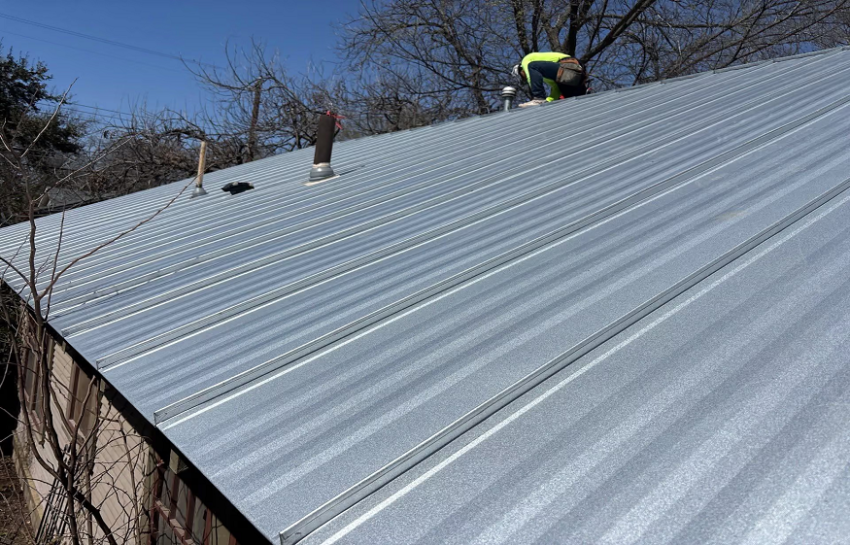
The gap between a minor repair and a full roof replacement often comes down to timing. Many leaks are a late sign of trouble, and the underlying damage may have been developing for months before water appears inside.
Check the roof from the ground
You don’t need a ladder to catch early trouble. A pair of binoculars used from the curb or driveway will show much of what matters. Stand back far enough to see each slope in full, then scan slowly from ridge to eave. Look for shingles that are missing or curling at the edges.
Asphalt shingles show age in fairly plain ways. Watch for edges that lift or buckle in patches. That distortion can come from heat or trapped moisture under the mat. Pay attention to the straight lines as well. A ridge or valley that dips or sags can indicate more than one bad shingle.
Glance at the metal and trim, too. Exposed nail heads or lifted tabs catch light in a way flat shingles don’t. If the roof looks wavy from the side, stay on the ground. Note the slope and date so you have a clear record for later.
Small changes are easier to track than sudden leaks.
Compare slopes as you scan. A slope that gets more sun may fade sooner, while a shaded slope may hold moss longer because it stays damp. Neither pattern alone means failure, but a sharp difference between two slopes of the same age deserves a photo. Take phone photos from the same safe spots each season so you can compare the change side by side without relying on memory.
Pay close attention to flashing
Flashing is the thin metal that seals the joints where water tends to enter. You’ll find it at chimney bases and in valleys, as well as around vent pipes and skylights. Those spots move slightly with heat and cold. When the metal loosens, water gets a path under the shingles.
Read More: The Ultimate Home Safety Checklist: Critical Inspections Every Property Owner Needs to Schedule
From the ground you can’t see fine cracks, but you can spot some of the signs. Look for rust streaks running down from the metal and for a dark gap where the metal meets brick or pipe. If the sealant line looks broken or pulled away, water may have an opening. Arrange a professional assessment rather than trying to inspect the area up close yourself.
Leaks can start at flashing rather than in the field shingles. The shingle itself may be sound while the joint beside it fails. A roof that looks fine from a distance can still allow water to reach a ceiling. If one area repeatedly looks damp after rain, make a note of it and point it out during an inspection.
Vent pipes deserve their own glance. The rubber collar around each pipe can dry and split after years of sun, allowing rain to run down the pipe into the attic. Skylight corners can develop similar problems when sealant shrinks and pulls back. Valleys may also collect leaves that hold dampness for days after rain, wearing granules faster along that line than on open field shingles that dry quickly after a storm passes.
Read what the gutters are holding
Gutters can reveal roof wear before the ceiling does. Stay at ground level and inspect material that has washed from the downspouts or collected around the splash blocks. If you see coarse, sand-like grit, it may be shingle granules. A small amount can be normal, while repeated or heavy deposits deserve professional attention.
Granules are the rough coating that shields asphalt from the sun. When that coating sheds, the mat below can age faster. You may also see small black chips around a downspout splash block. Continued shedding suggests the surface is wearing thin. It is age showing up as grit.
While you’re there, look at drainage during or shortly after rain. Clogged gutters can push water back toward the eaves. That backup may soften the fascia and soffit first. Those boards close the rafter ends and help support the gutters. Check the visible drip edge from the ground, too. That thin metal lip should guide water clear of the wood.
If the lip appears missing or rusted through, the fascia may stay damp and eventually rot. Gritty granules near the downspout paired with visible damage to the eave can point to wear in more than one part of the roof system.
Step back and trace each downspout to ground level. If an elbow pours onto a splash block that has shifted, water can pool toward the foundation and splash onto the fascia during prolonged heavy rain. Look up at the soffit panels for sagging areas, staining or peeling paint. Those marks sometimes appear before roof damage becomes obvious from the ground.
Look inside the attic with a flashlight
The attic can show what the outside hides. From a secure attic access point on a bright day, use a good flashlight and briefly turn it off first. Look for thin beams of daylight at seams or around nails. Light can indicate an opening that may also admit water, so photograph the general area for a professional to assess.
Then turn the light on and scan the visible wood. Water can leave rings on rafters and dark streaks on the deck. Check the insulation visually rather than touching or moving it. Areas that look flat, compressed, discolored or damp may have held moisture. A musty smell can also point to poor drying.
Ventilation matters up here as well. Soffit vents bring cooler air in while ridge vents allow warmer air to leave. When that flow is blocked, heat can build and shingles may age sooner. If you see widespread dampness, stained insulation or daylight across the boards, ask a local crew such as Tarrytown Roofing to trace the source before the problem spreads.
Don’t move insulation aside, enter unfinished areas or step between joists. Take photos from the secure access point. Clear images can help a roofer identify the likely path and prepare for a closer inspection.
Check where bath and kitchen fan ducts appear to run, but do so without entering the attic. If a duct ends loose inside instead of passing through the roof or wall, showers and cooking can send warm vapor into cold wood. That moisture may condense on nails and drip onto insulation, leaving spots damp for days. Also look for insulation that appears to cover soffit vents, since blocked intake can restrict airflow through the attic.
Learn the difference between stains and growth
Dark streaks often look more alarming than they are. Algae commonly appears as flat black lines running down the slope. It feeds on filler in shingles and can affect the roof’s appearance. By itself, it does not usually lift shingles, although the roof should still be monitored for other changes.
Read More: The Ultimate Guide to Planning a Home Extension: Adding Space Without Moving
Moss is different. It grows thick and green in shaded areas near trees. Those mats hold water against the surface, and constant damp can loosen granules and lift shingle edges. If you can see lifting under the moss, arrange a professional assessment instead of treating it as a cosmetic issue.
Inside stains can tell a clearer story. A leak stain may have a sharp, dark edge with a lighter center. It can grow after rain and remain visible once dry. Surface dust generally wipes away. A crisp ring on drywall will not, and it may mean the material above has been wet more than once.
Don’t scrub moss hard or blast it with high pressure. That force can strip granules and shorten shingle life more quickly than gradual moss growth over a single season. If growth covers wide patches, leave removal to a professional who can treat and lift it without tearing the mat. Your role is to spot, photograph and track the growth from the ground.
Factor in freeze and thaw
In climates with freezing winters, changing temperatures move roofs in small steps. Snow may melt from house heat and then refreeze at a cold eave. That frozen ridge is an ice dam, and it traps water behind it. The backed-up water may work under shingles.
Possible signs include large icicles and stained fascia. Icicles do not always confirm a dam, but they show that water is freezing at the edge. From the ground, look for a thick band of ice above the gutter and for water marks on the soffit after a thaw. Both can indicate backup that has reached under the edge.
Repeated freezing and thawing can also work joints loose. Water enters small gaps and widens them as it freezes. Flashing around chimneys may take that stress during cold seasons, while shingle tabs can lift further after repeated cycles. In these conditions, edges and joints deserve particular attention during ground-level checks.
Don’t chip at roof ice or toss salt onto shingles. Both actions can scar the surface and create paths for later rain. Where freezing weather is common, keep gutters clear through a professional or suitable ground-based service so meltwater can drain. Consistent attic temperature and steady airflow are safer and more useful than a quick repair attempt from a ladder in winter.
Stick to a simple inspection rhythm
You don’t need to watch the roof every week. For many homes, a ground-level check in spring and another in fall provides a useful routine, although local weather and roof condition may call for a different schedule. The spring check can reveal winter movement, while the fall check helps identify gutter or seal problems before colder weather. Write the date on your phone photos to make changes easier to follow.
Add another ground-level check after unusually hard weather. High wind can crease tabs and drop shingles into the yard. Hail may bruise the mat without tearing it. Those bruises can be faint from the ground and require professional assessment. If nearby homes lost shingles, look carefully for visible changes to your own roof.
Consistency finds what a single intense inspection can miss.
After strong wind, walk the yard first. Fallen tabs in the grass can show where damage occurred and help a roofer match the repair.
Decide what you can watch and what needs a pro
Some cosmetic signs can be tracked through your regular ground-level checks. A small algae streak may only need monitoring if there are no other signs of damage. A lifted, loose or creased shingle should be assessed by a professional, even when the attic below appears dry. Photograph visible changes and avoid climbing onto the roof for a closer look.
Other signs call for prompt professional attention. Repeated ceiling stains mean water has found a path. Widespread granule loss or buckling across slopes suggests substantial surface wear. Storm impact with missing patches may leave the deck exposed. Roof age matters too, but expected service life varies with the material, installation, ventilation, maintenance and local conditions.
Owners who track small shifts are better placed to make informed decisions. They can show what is new and what has remained unchanged. A licensed inspection can then confirm the source instead of relying on guesswork. You stay safely on the ground or at a secure attic access point while the professional assesses the roof.
Early damage is often subtle. Regular, condition-based checks make it easier to spot before water reaches the living space.
2 thoughts on “A Homeowner’s Guide to Spotting Early Roof Damage”