
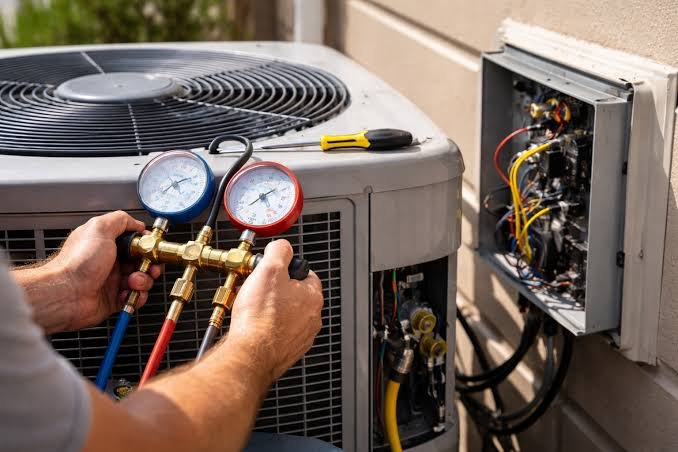
Florida’s warm climate can keep residential cooling systems active well beyond summer. That demanding climate makes spring a sensible time to check whether your home is ready for the hotter months.
Why Florida cooling never really rests
Central Florida homes may need cooling during much of the year, although runtime varies with weather, the building and household preferences. Long operating seasons can increase wear and keep condensate systems active, making routine checks especially useful.
Salt air near the coast can speed up corrosion on outdoor components. Inland homes contend with pollen and dust that gradually cake onto coils. Either condition may affect equipment over time, depending on exposure, design and maintenance. Professional inspection can distinguish routine buildup from corrosion or damage that needs attention.
System size matters too. Oversized equipment may cool quickly and shut off before providing enough dehumidification, while undersized equipment may struggle during demanding conditions. A qualified load calculation accounts for features such as windows, insulation and other sources of heat gain.
Change filters more often than you think
Clogged filters can contribute to summer cooling problems. Dust can build quickly when the fan runs frequently. Filter life varies with the home, equipment, filter type, occupancy, pets and indoor air conditions, and restriction may develop before a comfort problem becomes obvious. Check the filter on the schedule recommended by the equipment and filter manufacturers, then replace or clean it as directed.
That habit can reduce avoidable airflow problems, although it cannot prevent every fault.
Restricted airflow can contribute to evaporator-coil icing, although ice and weak cooling can have several causes. If you see ice, follow the manufacturer’s shutdown guidance and arrange qualified diagnosis rather than assuming a filter change has solved the underlying problem.
Read More: How to Create a Comprehensive Water Safety Plan for Your Household
Filter efficiency and resistance must suit the specific blower and duct system. Higher-rated filters can capture finer particles, but an unsuitable filter may restrict airflow. Follow the equipment manufacturer’s guidance or ask a qualified HVAC professional which option fits the system. A clean filter helps keep energy use in check. Replacing a dirty, clogged filter can lower your air conditioner’s energy consumption by 5% to 15% (U.S. Department of Energy).
Set reminders based on the recommended inspection schedule and keep the correct replacement filter available. Dating a new filter can make the maintenance record easier to follow.
Give the outdoor unit room to breathe
The outdoor unit transfers heat from your home to the outside air. The fins on its coil need clear airflow to do that job properly. Florida pollen can coat those fins in spring, while grass clippings and storm litter often collect around the base.
Keep plants, stored objects and loose debris away from the unit according to the manufacturer’s stated clearance requirements. Those distances vary by model and installation. Do not open panels, reach inside the cabinet or clean coils unless the manufacturer expressly describes a homeowner-safe method. Electrical components may remain hazardous even when a switch appears to be off. Ask a licensed HVAC professional to inspect damaged fins, wiring, contamination or suspected leaks.
Run the thermostat for heat and humidity
Florida comfort depends as much on moisture as temperature. Cool air that still feels sticky isn’t comfortable. Your system pulls water from the air only when it runs long enough, so short bursts can chill a room while leaving much of the humidity behind. That is why steady control usually works better than repeatedly choosing icy settings.
Humidity affects how comfortable a temperature feels because perspiration evaporates less readily in moist air. Cooling cycles can remove moisture, but actual humidity control depends on equipment design, sizing, controls, infiltration and building conditions.
Read More: The Ultimate Home Safety Checklist: Critical Inspections Every Property Owner Needs to Schedule
Choose a thermostat setting that is safe and comfortable for the people in the home, particularly older adults, young children and anyone with a health condition. A schedule may reduce unnecessary runtime when the home is empty, but suitable settings depend on the building, equipment and humidity. Follow the thermostat and HVAC manufacturer’s instructions rather than relying on one temperature for every household.
Oversized equipment may short-cycle and provide less dehumidification in some homes, but humidity problems can have several causes. A qualified load calculation and system assessment are more reliable than judging size from runtime alone.
Know when DIY ends and a contractor takes over
Homeowners can generally replace accessible filters and keep stored objects away from the outdoor unit when they follow the equipment instructions and can do so safely. Refrigerant work and high-voltage repairs are different. Those jobs call for training, certification and tools most people don’t have at home.
Weak cooling, ice, unusual noise or repeated cycling can have several causes and do not establish a refrigerant problem by themselves. Refrigerants and pressurized cooling circuits require specialized training and may be subject to legal handling requirements, so diagnosis and repair belong with a properly licensed or certified professional.
Starting failures, humming, slow fan movement or repeated clicking can involve electrical components, controls or other faults. These symptoms are not a safe basis for DIY testing. Keep clear of the cabinet and let a qualified professional diagnose the cause.
If you notice ice, electrical smells, unusual noise or repeated starting problems, follow the equipment’s shutdown guidance and arrange professional help. In Florida AC Repair is essential when seeking professional assessment. Confirm licensing, scope and availability directly. Refrigerant circuits, capacitors and high-voltage equipment should not be treated as homeowner troubleshooting projects.
Prep for hurricane season overlap
Storm season starts June 1, just as the heat peaks. Cooling demand is at its highest when the risk of an outage is also high. Floodwater and windblown debris can create mechanical and electrical hazards around outdoor equipment. Early preparation may reduce exposure, but it cannot make the unit storm-proof.
Before a storm, secure loose yard objects without approaching equipment in unsafe weather. Follow official emergency guidance and the HVAC manufacturer’s storm instructions. Do not improvise covers or electrical procedures. After flooding, visible electrical damage, movement of the unit or impact from debris, keep clear and have the system assessed by qualified professionals before use. Electrical isolation should be handled only as directed by emergency authorities, the manufacturer or a licensed professional.
A qualified electrician or HVAC professional can explain whether listed surge-protection equipment is appropriate for the home and system. No device prevents every form of lightning or surge damage, so homeowners should understand the product’s rating, installation requirements and limitations.
Have drains, ducts and insulation assessed
Biological buildup or debris can restrict some condensate drains. A blockage may cause a shutdown or water damage, depending on the installation and its safeguards. Some systems include a float switch, but its presence and operation should be confirmed rather than assumed.
Condensate-drain maintenance varies by equipment and installation. Follow the manufacturer’s instructions and avoid adding chemicals, opening fittings or applying suction or pressure unless the procedure is specifically approved for that system. A slow drain, recurring shutdown or water near the equipment calls for qualified inspection.
Duct leakage or inadequate insulation in a hot attic may increase heat gain and reduce delivered cooling. The extent and likely value of repairs depend on testing, access, duct condition and the building envelope.
Dust marks, uneven temperatures or unexpectedly long runtime may justify a duct and building-envelope assessment, but they do not prove where a leak exists. Do not enter a dangerously hot, cramped or unfinished attic to investigate. Qualified HVAC, insulation or energy professionals can assess ducts and insulation, explain applicable building requirements and recommend work suited to the home.
Decide whether to fix or replace and beat the rush
Every cooling system eventually reaches a point where further repairs no longer make financial sense. Age is one clue, but condition, maintenance history, parts availability, repair cost and performance matter too. An older system is not automatically due for replacement, and a newer one is not automatically economical to repair.
Efficiency labels can help compare equipment, but applicable standards depend on equipment type, region and installation date. A higher rating does not guarantee a particular bill reduction because weather, duct losses, sizing, use and electricity prices also affect cost. Do not replace a system on a rating alone.
Consider repair history alongside comfort and ask for written repair and replacement options. Persistent temperature or humidity problems may involve equipment, ducts, controls or the building envelope. No replacement can promise one indoor temperature or humidity level in every home. Compare expected performance, warranty terms, installation scope and total cost before deciding.
For replacement work, ask how the contractor will calculate the building’s heating and cooling load using an accepted method, such as the method required by applicable code or program rules. The assessment should consider relevant features such as windows, insulation and air leakage. Proper design supports equipment selection, but results still depend on installation and operating conditions.
Scheduling service before the hottest weather may offer more flexibility, depending on local demand. Ask what the visit includes, what testing is appropriate and which findings would lead to an additional charge. Maintenance plans differ substantially, so compare the visit schedule, exclusions, cancellation terms and price instead of assuming a standard package.
Early preparation gives homeowners time to check filters, review thermostat operation and arrange qualified help before peak demand. It cannot prevent every breakdown or guarantee lower bills, but it can reduce guesswork and make developing problems easier to address safely.