
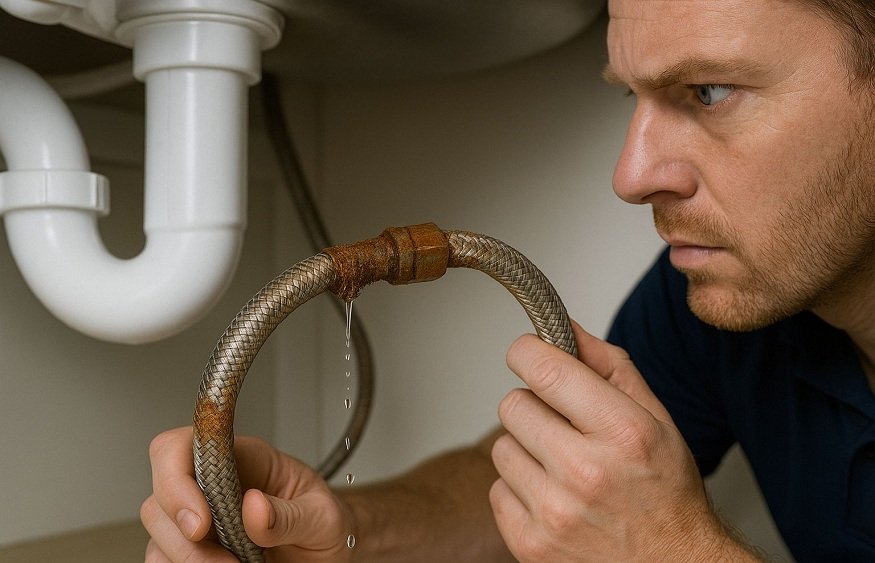
The majority of water disasters in homes are not caused by a big, one-time event. They result from a small leak that went undetected or from a $12 coupling on a hose that finally failed at 2 AM. A water safety plan isn’t about making a purchase – it’s about understanding your system well enough to catch issues before they turn into an insurance loss.
Map Your System Before You Need To
Let’s start with the least thrilling, though probably most important home-related thing. Know where your main water shut-off valve is. Ideally, every responsible adult living in your house should know where this valve is and should be able to turn it in under 30 seconds, in the dark, half asleep, without asking Google.
Read More : When Hot Water Stops Working at the Worst Time
The main shut-off is commonly located near the water meter, which for old houses is often in a basement, and for newer ones is usually in a dedicated utility closet or possibly a crawl space access point. But that’s not the only shut-off you should be aware of. Every single fixture in your house – toilets, sinks, the washing machine, the water heater – has its very own shut-off valve. Take a walking tour of your house and label them now. It costs a few cents per valve. A little tag or strip of tape with a sharpie will do the job just fine. But ideally, you don’t want to be figuring out which shut-off turns off the toilet supply line while your bathroom is getting sprayed with water in an emergency.
You’d be surprised how satisfying this little exercise can be. It should take an hour, tops. Take pictures of the valves while you’re at it. A nice photo inventory of your shut-offs, water heater, and main supply line in any newish appliances will also just help you remember what the heck everything is – and double as documentation if you ever have to make an insurance claim.
Inspect Your Supply Lines, Especially The Flexi Hoses
Once you have a good idea of where your shutoffs are, what they’re for, and how accessible they are, go ahead and take a closer look at what they’re shutting off. The most common point of sudden failure in residential plumbing is the simplest to overlook: those invisible braided flexi hoses carrying water from the wall to almost every major appliance and plumbing fixture in your home.
In your kitchen, your bathroom, and your laundry, under almost every sink, basin, and tap, behind almost every toilet, connecting to your washing machine, and quite possibly furnishing water to your fridge or other appliances, it’s the same innocuous-looking tangle of braided steel or nylon that puts the water in the room just where you need it. It looks sturdy. It’s one of the cheapest parts of plumbing an entire house. It’s one of the most effective – except it’s not supposed to last forever, and most people don’t know that.
These hoses typically have a working life of five to ten years, and they rarely give you a warning before they go. A burst flexi hose can dump hundreds of liters of water into a kitchen or bathroom in the time it takes someone to notice and react. It’s one of the leading causes of sudden, high-cost water damage in homes, and it happens because these small braided connectors get treated as invisible – installed once, forgotten, and never checked again until they fail.
Check every flexi hose in your home for bulging, cracking, rust stains around the fitting, or any kind of kinking. If a hose is more than five years old and you don’t know its history, replace it now rather than waiting for it to make the decision for you. This is one of the cheapest and most effective pieces of preventative plumbing work you’ll ever do – a new hose costs a fraction of what a flood cleanup does.
Check Your Water Pressure
Water pressure that is too high can cause serious damage to your plumbing, fixtures, and appliances. This relentless force also wastes water and energy. Homes supplied by municipal water systems or well water (or both) can develop high water pressure. It is not just an inconvenience or annoyance. It can actually pose a threat to your property and family.
Most residential systems are designed to handle somewhere around 40 to 80 psi. Anything consistently above that range accelerates wear on everything connected to your supply line, including those flexi hoses we just talked about. You can check this yourself with a simple hose-end pressure gauge, available at most hardware stores for under twenty dollars. Screw it onto an outdoor spigot, turn the water on fully, and read the number.
If you’re regularly seeing readings above 80 psi, it’s worth installing a pressure reducing valve (PRV) at the point where the main line enters your home. A PRV brings incoming pressure down to a safer, more consistent level and extends the working life of nearly every fixture and appliance connection in the house.
Run ALeak Test Using Your Water Meter
One of the most underrated tools in a homeowner’s plumbing plan is free and does not require any special skills to use: it’s the water meter.
Here’s how it works: Turn off every tap, appliance, and fixture in the house. Don’t run the dishwasher, don’t flush anything, make sure the ice maker isn’t cycling. Note your water meter reading, wait two hours, then check it again.
If the number has moved and nothing was using water during that window, you’ve got a leak somewhere in the system. It might be small. It might be behind a wall or under a slab. Either way, a rising meter reading with everything off is a clear signal that you need a licensed plumber to trace it down before it turns into structural damage.
This matters more than people realize. According to the U.S. EPA’s WaterSense program, household leaks account for nearly 10,000 gallons of wasted water per year on average per home, and roughly 10% of homes have leaks bad enough to waste more than 90 gallons a day. Most of that waste is invisible until the water bill shows up or the damage becomes visible.
Maintain Your Water Heater Properly
There are two ways your water heater can fail. One is the age-old sediment build-up at the bottom of the tank that makes the heating element work less efficiently and shortens tank life. The other is pressure or temperature build-up inside the tank that can cause serious safety issues. Neither problem will occur if you follow a sensible maintenance routine.
Start by flushing the tank at least once a year. This will get rid of that sediment that insulates the heating element from the water it has to heat and, as a result, causes your water heater to use more energy. While you’re down there, test the temperature and pressure (T&P) relief valve according to the manufacturer’s instructions. This is a safety device that releases excess heat and pressure should the gas control valve fail. Most manufacturers recommend you test it every six months.
If you’re worried about bacteria in the tank and you live in a household with small children or elderly folks (who tend to have less resistance to bacteria), consider installing a thermostatic mixing valve. This will allow you to keep the tank set hot enough to inhibit bacterial growth while reducing the risk of scalding at the tap.
Install Leak Detection Where It Counts
Affordable and reliable smart water sensors exist today, and so there’s no excuse not to install them. Put one under the kitchen sink, in the laundry room, by the water heater, and in any frequently used bathrooms with a history of problems. They typically link up with your phone and send an alert the moment they detect a leak, so a loose valve that trickles out water gets fixed when it’s a $20 part, not a weekend of sheet rock.
Some systems include a shut-off valve linked to the sensor that automatically stops the water supply if anything catastrophic is detected or if a strange flow pattern is noticed (even if you’re not home to address the alert). If you travel a lot or have a vacation property, this sort of thing is worth the extra cost.
Confirm Backflow Prevention And Protect Outdoor Connections
Where the water leaves the household plumbing system is a potential point for a cross-connection – a garden hose, sprinkler system, or utility sink with a hose attachment. Backflow prevention devices keep contaminated water from being siphoned back into your clean supply line. That’s more important than you’d think. We tend to take for granted that solid water stream coming from our taps. A single pressure drop in the municipal supply could compromise your whole system.
Make sure your outdoor hose bibs and irrigation connections are protected with the appropriate backflow preventers. And before winter hits, don’t forget to disconnect garden hoses, drain outdoor spigots and insulate any exposed pipe runs in unheated spaces like garages or crawl spaces. Frozen pipes are a totally preventable seasonal risk, with about thirty minutes of easy prep work each year. If you’re heading out of town and leaving the house unoccupied for weeks, learn how to empty out your system. A pipe that freezes and bursts while you’re gone can mean thousands in damage.
Build Your Emergency Response Plan
All the inspection work described above is preventative. But you also need a plan for when something goes wrong anyway, because eventually something will.
Put together a simple emergency kit: a flashlight, a written list of shut-off valve locations with photos, emergency contact numbers for a licensed plumber, and a copy of your homeowner’s insurance policy details. Review your policy’s water damage coverage limits and exclusions now, not after a pipe has already burst. Many policies have specific documentation requirements for water damage claims, and having photos of your plumbing system from before an incident makes that process considerably smoother.
Walk through the shut-off procedure with everyone in the household at least once. It sounds excessive until you’re the one standing in ankle-deep water at midnight trying to remember which valve does what.
Read More : Why CPVC-X Pipes Handle Hot Water BetterThan Others
A solid water safety plan doesn’t require a big budget or a weekend of construction work. It requires knowing your system, checking the parts that fail most often, and having a plan ready before you need it. The households that avoid the worst water damage aren’t the ones with the newest fixtures – they’re the ones who checked their flexi hoses, tested their water heater, and knew where the shut-off valve was before the alarm went off.
2 thoughts on “How to Create a Comprehensive Water Safety Plan for Your Household”